How to Document Your Travels Without It Becoming a Chore
The way to document your travels without it becoming a chore is to keep the daily cost below two minutes: take photos when the moment asks, record one voice note for anything a photo cannot capture, keep receipts and ticket stubs, and end each evening with a 30-second note. None of it is optional work on top of the trip — it is the trip, recorded the way it happened. The rest happens in one quiet week at the end, when the stories are still fresh and the work is finite.
Why your travel documentation dies on day three
Ask anyone who has kept a travel journal what happened to it. The most honest answer is: it lasted the first three days. The enthusiasm was real, the notebook was nice, and by the second evening the writing had become a task instead of part of the trip — something to get through before dinner, or worse, something to feel bad about not doing.
The problem is not the traveler. It is the format. Most documentation advice treats the trip as a project with deliverables: a page a day, a vlog per city, a post per landmark. That is a job, and a job on a holiday is exactly what people quit. The fix is to invert the ratio: keep the daily cost below two minutes, so the documentation is thinner than the trip itself, and let the work that needs real time happen once, at the end, when it is finite.
This is the system that survives: five layers, in order of effort per memory. Each one covers a gap the others leave open — drop a layer and the trip’s record has a hole in it — and together they take under two minutes a day, which is the only cost a daily system can have and still survive the trip itself.
The five layers (in order of effort per memory)
The layers are not a checklist you run in sequence. They are five different tools that each cover a gap in the others. Photo apps are superb at pixels and useless at meaning. A notebook is perfect for meaning and useless at pixels. Voice notes capture what neither can. The nightly note ties them together. The week at the end turns the raw material into a record you will actually open again.
Layer 1: Photos (zero effort, but they are only the shell)
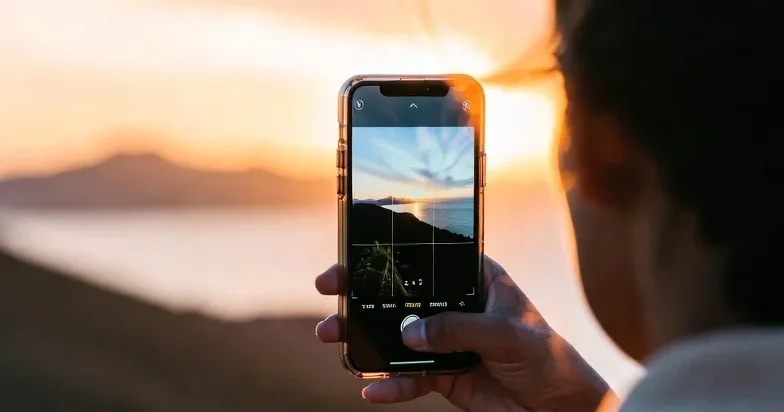
This is the layer everyone does, and it is genuinely zero effort — the photo happens when the moment asks. Do not plan it, schedule it, or make it a task. If a moment asks for a photo, take it.
What is worth saying is what photos do not capture. They hold the visual record — the place, the food on the plate, the people in the frame. They do not hold the sound of the street, the smell of the bakery, the joke that made the group photo, or why that unremarkable café mattered. A photo without that context becomes, over a few years, an image of a place you can no longer quite explain. The other layers exist to attach that context to the pixels.
One practical note: take more than feels necessary. A week of travel produces 500-1,000 photos on a phone, and that is fine — culling is the first job of the week at the end, and the photo organizing guide walks through the two-pass method. The cost of a few hundred extra photos is nothing; the cost of a missing moment is permanent.
Layer 2: Voice notes (the highest-value thirty seconds)
This is the layer almost everyone skips and the one with the best return. Open the voice memo app on your phone and record ten to fifteen seconds whenever a photo would not do the job:
- The sound of a place. A market at 7 a.m., a church during service, a street after rain. You will not hear it again, and a photo of that street says nothing about it.
- The food. Not what it was — the photo of the plate does that — but what it tasted like, what it cost, and where you will go back. “Second floor of the green building near the station, the stew with the smoked sausage, 8 euros, we will be back” is a sentence that is worth more than any caption.
- The conversation. A local who told you the name of the neighbourhood, a fellow traveler who recommended the next town, a guide who said one line that stuck. Record the line while you can, even if it is three seconds.
- The feeling. The moment you stepped onto the balcony and saw the valley. The exact moment the trip started to feel real. You will not write it down that night — you will be tired — but ten seconds of “okay, this is it, this is the moment” is a marker that makes the trip’s arc legible years later.
Two or three a day is plenty. More than that and it becomes a task, and the task is the thing we are trying to avoid. The voice notes are the layer that makes the trip sound like it did, not just look like it did.
Layer 3: Paper scraps (the physical evidence)
This is the layer that feels old-fashioned and is genuinely the most reliable. In one pocket — the inside jacket pocket works, the suitcase outer pocket works — keep:
- Receipts for anything worth 20 euros or more, or anything you might claim back. The post-trip checklist covers the financial close-out, and receipts are the raw material.
- Ticket stubs and boarding passes. They are the trip’s physical skeleton — the dates, the route, the sequence. A stack of them at the end of a trip tells the story of where you went without a single photo.
- The map you folded. The one with the coffee ring and the handwritten arrow. It is the trip’s most personal artifact and it will not survive a year in a drawer if it is not put somewhere deliberate.
- The page you scribbled on. The back of a restaurant bill with the address of the place you want to go back to. The napkin with the name of the hotel the local recommended.
This layer costs zero time during the trip — the scraps come with the trip. The only discipline is to put them somewhere you will find them at the end, not to lose them in the jacket that goes into the laundry on day one.
Layer 4: The 30-second nightly note
This is the layer that ties everything else together, and it is the one most people skip because it feels like work. It is not work if it is 30 seconds.
At the end of each day — in the hotel room, on the train home, wherever you actually stop — open the notes app on your phone (or a paper notebook if that is your medium) and write one or two sentences:
- Day 3 — Lost for an hour, found the best bakery of the trip by accident. The sausage with the smoked cheese, worth getting lost for.
- Day 5 — The hike was harder than the map suggested. The view at the top made up for it. Will do the shorter route next time.
That is the format. One or two sentences, in your own words, about what actually happened. Not a diary entry, not a caption, not a post — a marker that says this day was this. It takes 30 seconds because you are not composing; you are just writing down what you already know.
Why this works: the notes are written while the day is still fresh, which is the only time the detail is available. By the week at the end, you will not remember which day the bakery was on — but the note will tell you, and the photo will confirm it, and the voice note from that afternoon will give you the sound of the street outside. Three layers, 30 seconds each, and the day is preserved in more detail than most people manage in a lifetime of travel.
The travel journal guide covers formats that work for people who write more than this — but if 30 seconds is all you will do, it is better than nothing, and it is the foundation the week at the end builds on.
Layer 5: The week at the end (where it all comes together)
This is the only layer that takes real time, and it is the one that turns the raw material into a record. The work is finite: cull the photos, sort them by trip and day, write the one-line stories, back up the originals. Two hours spread over a week, front-loaded to when your memory is still sharp.
The photo organizing guide walks through the full method — the two-pass cull, the trip album, the one-line story per keeper, the backup. What is worth adding here is that the voice notes and the nightly notes from the trip are the raw material for that one-line story step. Instead of trying to reconstruct what happened from the photo alone, you listen to the voice note from that afternoon, read the nightly note from that day, and the one-line story writes itself:
“Day 4 — the alley where the wedding parade appeared. The sound of the brass band is in the voice note. We nearly missed the train because of it. Worth it.”
That is the layer that makes the trip mean something years later. The photos are the shell. The voice notes are the content. The nightly notes are the skeleton. The week at the end is the glue that holds them together into a record that reads back as the trip actually happened, not as a grid of thumbnails.
What not to do
The system works because it is thin. The things that break it are all variations of the same error — treating documentation as a deliverable instead of a byproduct:
- Don’t schedule it. A 4 p.m. “documentation hour” is a job, and jobs get skipped. The layers happen when the moment asks, not on a timetable.
- Don’t edit in the field. A voice note is not a podcast. Ten seconds of raw “okay this is good, the smoked sausage one, 8 euros” is the point. Editing is the week at the end’s job.
- Don’t post while you travel. Social media is a different medium with a different clock — it rewards the moment you are living in, not the trip you are building. If you post, do it from the week at the end, when the story is finished and you are no longer performing it.
- Don’t buy a dedicated journal you will not carry. A nice notebook is a lovely object. It is also 300 grams of guilt in the suitcase and a blank page on day four. If the notebook is not going to be open on day three, the phone notes app is the honest tool.
- Don’t document for the audience. If the system is built to produce content for someone else, it will be designed for their attention, not for your memory. The test is simple: will you open this record in ten years? If the answer is no, the system is for the wrong person.
How long does this take, honestly?
During the trip: under two minutes a day. The photos take themselves. The voice notes run ten to fifteen seconds each, two or three a day. The scraps pocket themselves. The nightly note is 30 seconds. Even a day when everything asks to be recorded comes to about 90 seconds — well under two minutes — and most days come in well below that.
The week at the end: about two hours spread over a few sessions. Cull the photos (30-60 minutes), sort them into the trip album (20-30 minutes), write the one-line stories using the voice notes and nightly notes as raw material (30-45 minutes), back up the originals (10 minutes, mostly waiting). The post-trip checklist slots this work into the other tasks of the first week home — laundry, expenses, unpacking — so it does not require a free afternoon.
The ratio is the point: two minutes a day for the trip’s duration, two hours for the trip’s lifetime. That is a documentation system that does not compete with the trip for your attention, because it does not ask for any.
When the trip is the memory
There is a version of this post that says: document everything, keep a detailed journal, photograph every meal, record every conversation. It is the honest version of the advice most people actually follow — and it is the version that dies on day three.
The version in this post is thinner. It captures less. But it captures the trip in the proportions it actually happened: the moments that asked for a photo, the sounds that a photo could not hold, the scraps that came with the trip, the one-line notes that mark the days while they are still fresh. And it does it in under two minutes a day, which is the only cost a system can have and still survive the trip itself.
If you want to go deeper, the travel journal prompts will give you something to write when the 30-second note feels too short, and the travel journal guide covers the formats for people who want more than a sentence a day. But the five layers above are the minimum system that works — thin enough to survive the trip, deep enough to hold it.
The trip ends when you get home. The record ends when you finish the week at the end. In between, under two minutes a day, is all it costs.
Frequently asked questions
How do I document my travels without it feeling like a job?
Keep the daily cost under two minutes and make the work proportional to the moment. Photos happen when the moment asks, not on a schedule. One voice note for anything a photo cannot capture — the sound of the street, the meal, the conversation. Receipts and ticket stubs go into one pocket. And a 30-second note at the end of each day. If a task would take longer than that on a busy travel day, it is the wrong task for that day — it goes on the after-trip list instead.
What is the best way to document a trip?
A system, not a single tool. Five layers work: photos for the visual record, voice notes for the context photos cannot hold (sounds, tastes, conversations), paper scraps for the physical evidence (receipts, tickets, maps), a short nightly note for the day's story while it is fresh, and one finishing week after the trip to cull, sort, write the one-line stories, and back up. Each layer covers what the others miss, and together they leave the trip as a record instead of a folder.
How much time does documenting a trip take per day?
Under two minutes on a typical day: the photos take themselves, the voice notes run ten to fifteen seconds each (two or three a day is plenty), the scraps pocket themselves, and the nightly note is 30 seconds. The real time cost is not during the trip — it is the week after, when culling, sorting, annotating and backing up take about two hours spread over a few sessions. That is why the weekly work is front-loaded: the stories fade fastest in the first days home.
Should I document my trip with a journal or an app?
The format matters less than the consistency. A paper journal works if the writing is your trip — people who write well by hand finish it. An app works better for most people, because it needs no buying, no carrying, no finding a quiet spot, and it already organizes by trip and day. The failure mode is not the tool; it is the format that is too much effort per day. Whatever you pick, the test is the same: will you still do it on day seven when you are tired?
How long after a trip do I have to finish documenting it?
About a week, to be precise. The photos can wait forever; the stories cannot. Memory research shows detail loss is steepest in the first days after an event — names, jokes, what a place smelled like go first. Start within 48 hours of getting home and finish within seven days: cull the photos, sort them by trip and day, write the one-line stories, back up the originals. A year later the same work takes twice as long and produces half the detail.
Keep reading
How to Keep a Travel Journal You'll Actually Maintain
A realistic travel journal method: 5 minutes a day, one line plus a photo, prompts that beat 'dear diary', and how to turn a trip into a story you revisit.
How to Organize Travel Photos After a Trip (Before You Forget)
A one-week workflow to organize travel photos: cull in two favorites passes, sort into trip and day albums, write each photo's story, then back up.

The Post-Trip Checklist: 12 Things to Do the Week You Get Home
A 12-item post trip checklist covering finances, unpacking, photo organizing, and journaling — everything to close out a trip in the week after you land.