How to Keep a Travel Journal You'll Actually Maintain
The way to keep a travel journal you'll actually maintain is to make it small: one line per day, one photo with a caption, written in the five minutes before bed. Memories of a trip fade within days, so the trick isn't discipline — it's a method cheap enough that you never skip it.
Why keep a travel journal at all?
Because you will forget the trip. Not the headline moments — you’ll keep the summit photo and the wedding-day-level highlights. What fades is everything that made the trip yours: the name of the noodle place you found by accident, what the ferry cost, the joke your kid made at the border crossing, how the air smelled after rain in a city you’d waited years to see.
That fading starts immediately. Within days, individual moments blur into a general impression (“Lisbon was lovely”), and details you were sure you’d remember are gone. Ask yourself what you ate for dinner two Tuesdays ago and you’ll feel the mechanism at work. A trip is a string of two-Tuesdays-ago dinners, and a travel journal is the only reliable way to keep them.
The problem is that most travel journals die by day three. You buy a nice notebook, write two long entries full of good intentions, then hit the first exhausting day and skip one night. The skip becomes two, the backlog becomes guilt, and the notebook comes home with 27 blank pages.
So this guide is not about journaling harder. It’s about a method small enough that you never skip it.
Paper or app: which travel journal format lasts longer?
Both work. They fail differently, so pick based on which failure you’re more prone to.
| Paper notebook | Phone/app | |
|---|---|---|
| Always with you | Only if you remember it | Yes — it’s your phone |
| Photos | No (or glue sticks) | Attached to the entry, same minute |
| Expenses | Manual, usually skipped | Can double as diary entries |
| Writing in the dark / on a bus | Hard | Easy |
| Distraction risk | None | One notification from a rabbit hole |
| Loss risk | One hotel nightstand from gone | Backed up with your photos |
| Rereading years later | Rare — it’s in a drawer | In your pocket during idle moments |
| The feel | Genuinely nice | Utilitarian |
The honest summary: paper is a better writing experience, and a phone is a better keeping experience. A notebook demands a lit surface, a pen, and energy. Your phone is already in your hand when you’re horizontal in the hostel bunk at 11pm — which is exactly when journaling happens or doesn’t.
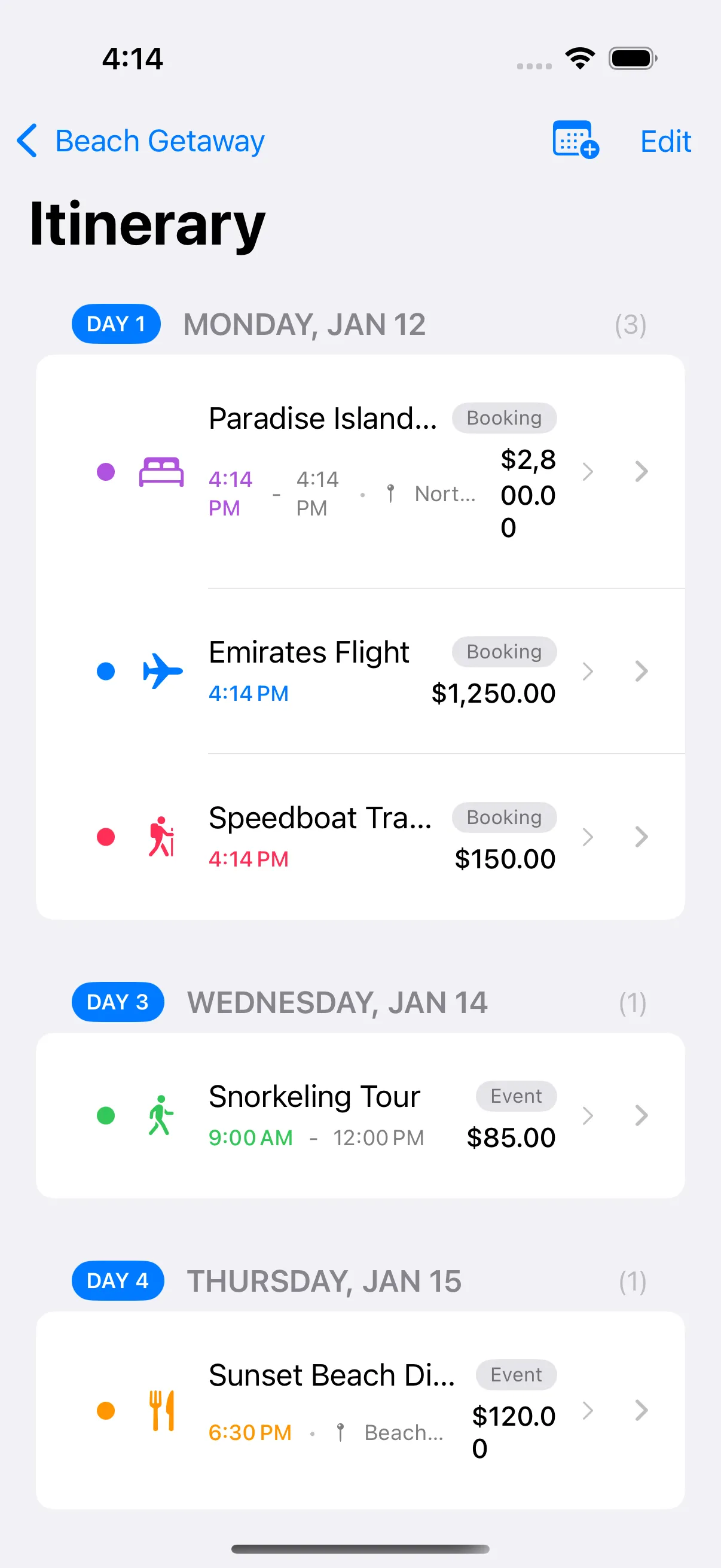
There’s also a structural advantage to using the same tool you planned the trip with. Your itinerary already knows it’s day 4 and you were in Kyoto; your expense log already says “eel restaurant, ¥3,200.” A dedicated notebook starts every entry from a blank page. A trip app starts every entry half-written. (If you’re choosing a tool, the best trip planner apps roundup compares the options.)
If you love paper, keep the paper — but back it with the phone method below so a lost notebook doesn’t mean a lost trip. If you want the full picture — what to document besides the journal itself, and how to keep the daily cost under two minutes — the guide on how to document your travels covers the five layers.
The 5-minute daily method
This is the whole system. It takes five minutes a night, and every part is designed to survive exhaustion.
1. One line per day — written the same day
One sentence. Not a summary of the day — the hook of the day. The thing that, read in five years, brings the rest back:
- “The monk at the temple gate laughed at my pronunciation and then taught me the whole greeting.”
- “Rain destroyed the beach plan; best card game of the trip in the hostel kitchen instead.”
- “Note to self: ‘grilled’ on this menu means ‘on fire.’”
One line is deliberately small. On a great day you’ll write three; the rule only requires one, so day nine feels as easy as day one. Anchor it to something you already do every night — most people use plugging in the phone charger. Phone goes on the cable, line gets written, done.
2. One photo, captioned
You already take photos. The journaling move is to pick one from the day and caption it while you still know what it is. A caption is context that no future version of you can reconstruct: which stall this was, who the stranger on the left is, why everyone in the frame is laughing.
Uncaptioned photos become wallpaper. Ten years from now, 40 photos of a market are noise; one photo captioned “the vendor who refused to let us pay for the mangoes” is a story.
3. Let your expenses double as diary entries
This is the most underrated journaling trick, because it’s journaling you’re doing anyway. If you track spending against your trip budget, every logged expense is a timestamped, located, priced diary entry:
- “Boat to the blue cave — €25” is the story of that morning.
- “Pharmacy, blister plasters — €4” is the story of that afternoon.
- Three gelato entries in one day is a story that needs no elaboration.
Logged the day they happen, expenses build a skeleton of the trip with zero extra effort. Your one-liners and captions put flesh on it. This is also why keeping the journal inside your trip planner beats a separate diary app: the skeleton is already there.
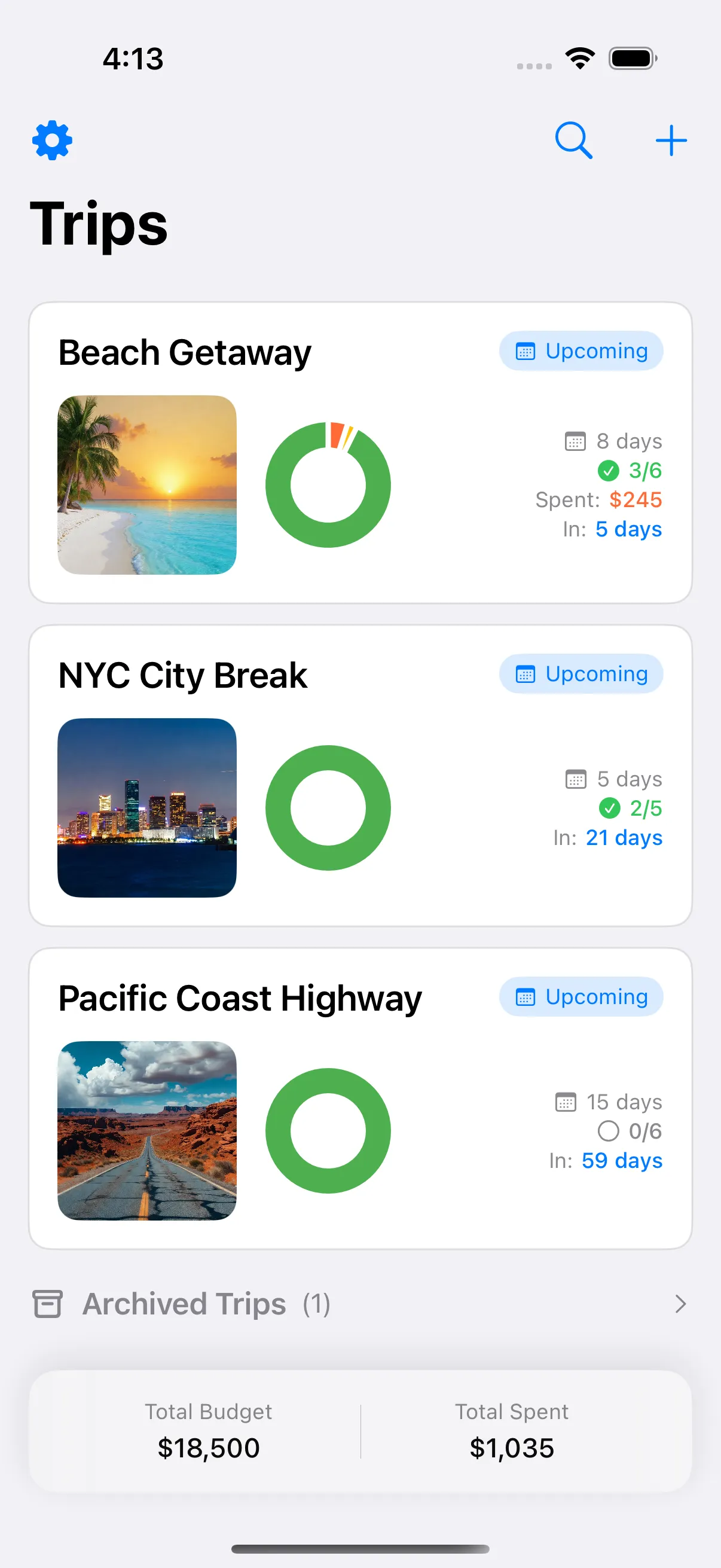
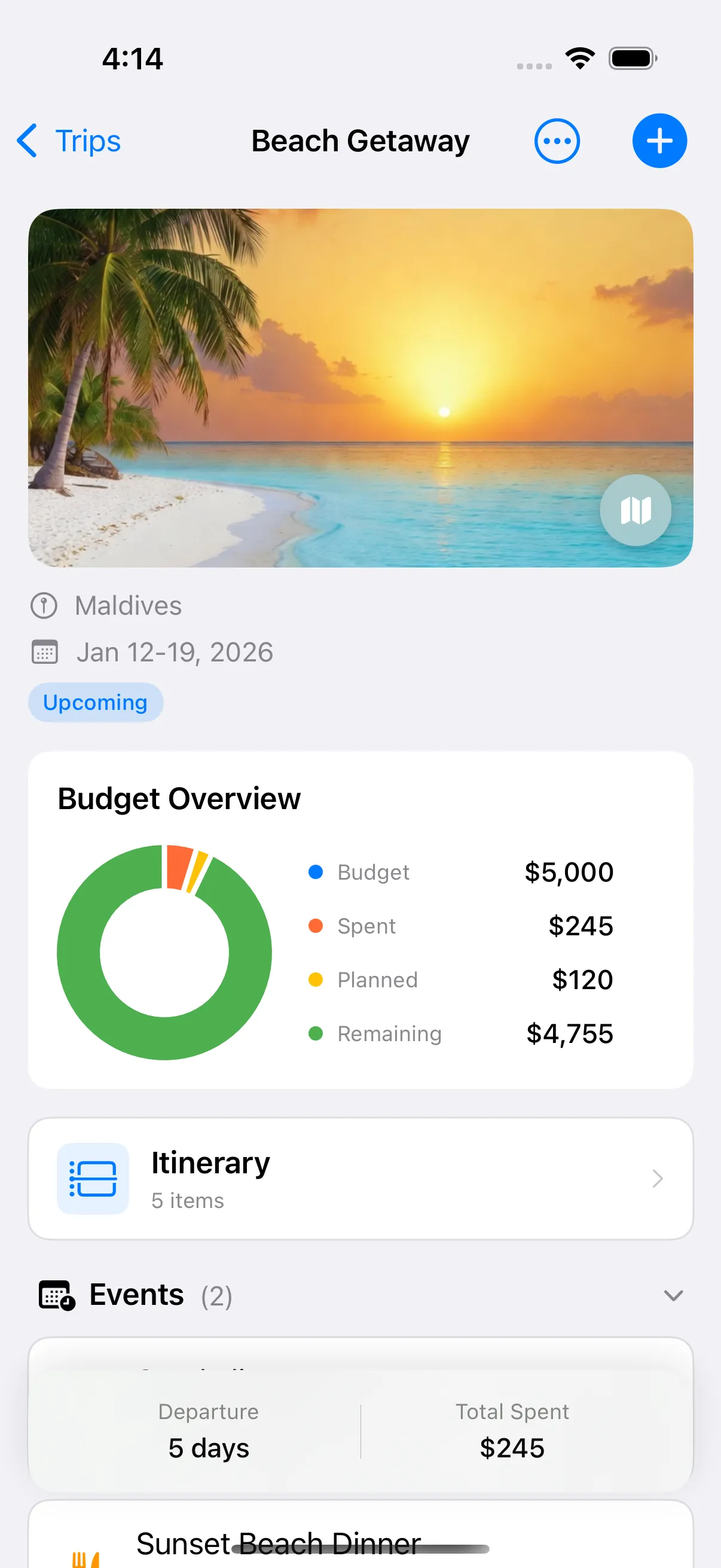
By the way, this combination — the plan and the memory living in the same place — is the idea Travel Stories is built around: the itinerary, checklists, and budget you make before the trip become the timeline of photos, notes, and expenses you keep after it, and you can download it free on the App Store. One honest caveat: no app writes the one-liner for you. The five minutes are still yours to spend.
Prompts that beat “dear diary”
Blank-page paralysis kills more journals than laziness does. “Write about your day” is a bad prompt because it invites a chronology (“we woke up, then we…”), which is boring to write and worse to reread. Concrete questions produce concrete details. Keep this list where you journal:
- What surprised me today? The single best prompt. Surprise is memory’s bookmark.
- What would I tell someone doing this exact day tomorrow? Produces useful, specific notes (“go before 9am, the queue triples”).
- Best thing I ate, and where exactly? Food is the fastest route back into a memory.
- What did something cost that struck me as very cheap or very expensive? Prices date-stamp a trip like nothing else.
- What went wrong, and what happened next? Disasters are the stories you’ll retell for decades. Log them while they’re still annoying.
- What did a local do that I want to copy?
- One sound, one smell. The senses photos can’t capture.
- Who did we meet? Names fade first. Write the name.
Use one prompt per night, not all eight. Rotate whenever one feels stale.
What if I miss a day (or three)?
You will miss days. Every traveler does — the overnight bus, the food poisoning, the evening that ran until 2am. What kills journals isn’t the missed day; it’s the story you tell yourself afterward: “I’m behind now, I’d have to catch up first.” Catching up feels like homework, so the journal quietly ends.
Three rules prevent that:
- Never write the backlog before today. Tonight’s line comes first, while it’s fresh. A gap behind you is a cosmetic problem; breaking the daily chain is a fatal one.
- Backfill in bullet points, not prose. For a missed day, write three fragments: where you were, one thing that happened, one thing it cost. Ninety seconds. Your photo library and expense log will reconstruct the sequence for you — check the timestamps and the day reassembles itself.
- Cap the debt at two days. Anything older than that, let go. An honest journal with two blank days beats an abandoned one with none.
For trips longer than two weeks, add one more habit: a weekly “chapter break.” On the rest day or the travel day between cities, spend ten minutes writing a five-sentence summary of the week. Long trips blur worse than short ones — the chapter breaks are what keep week two in Vietnam from dissolving into week five in Thailand when you reread it all next year.
How do you turn a finished trip into a story you’ll revisit?
A journal’s value is realized in the rereading, and raw daily entries need about 15 minutes of finishing work to become rereadable. Do this within a week of getting home, while gaps can still be filled from memory:
- Fill the holes. You skipped a day or two. Write those one-liners now — approximate is fine, blank is not.
- Pick the top ten photos. Not sixty. Ten, captioned, in order. This is the version of the trip you’ll actually show people.
- Write the closing note. Three sentences: what you’d tell someone taking this trip, what you’d do differently, the moment you’d relive. This paragraph is disproportionately what future-you will treasure.
- Skim the expense log once. It reads like a diary you didn’t know you kept — and it makes budgeting the next trip dramatically more accurate, because you now have real numbers instead of guesses.
Then the last habit: reread on anniversaries. A year later, open the trip and scroll the timeline. This costs nothing and is the entire payoff of the whole method — five minutes a night, traded for the ability to walk back into a week of your life whenever you want. If your journaling is one of several documentation habits — voice notes, receipts, the photos — the guide on documenting your travels shows how they fit together without becoming a chore.
Put it into practice
Start tonight’s habit before the trip starts: one line, one captioned photo, expenses logged the day they happen — and if you’d rather keep the plan and the memories in one place, Travel Stories does exactly that, turning the trip you organized into the story you keep.
Frequently asked questions
What should I write in a travel journal?
Write specifics, not summaries: the name of the street food stall, what the taxi cost, the sentence a stranger said to you, what surprised you that day. Skip the weather report and the play-by-play. One concrete detail per day beats a page of generalities, because details are what actually bring the day back later.
How long should a travel journal entry be?
One to three sentences is enough. The goal is a hook that brings the day back when you reread it, not a complete record. Short entries are also the reason you'll still be journaling on day nine — a method that asks for a page a night usually dies by day three.
Is it better to keep a travel journal on paper or in an app?
Paper is distraction-free and pleasant to write in, but it can't hold photos, gets left in hotel rooms, and rarely gets reread. An app is always in your pocket, ties notes to photos and expenses, and works in a dark room or on a bus. Most people maintain a phone-based journal longer; some keep paper for trips where slowness is the point.
How do I journal when I'm too tired at the end of a travel day?
Lower the bar instead of skipping. On exhausted nights, write one line or just caption a photo from the day — that still preserves the hook. Anchoring the habit to something you already do, like plugging in your phone at night, works better than relying on motivation.
What do I do with a travel journal after the trip ends?
Give it 15 minutes within a week of getting home: pick your ten favorite photos, fill any gap days from memory while you still can, and write a short closing note about what you'd tell someone taking the same trip. That turns raw entries into a story, and stories are what you actually revisit years later.
Keep reading
How to Organize Travel Photos After a Trip (Before You Forget)
A one-week workflow to organize travel photos: cull in two favorites passes, sort into trip and day albums, write each photo's story, then back up.

The Post-Trip Checklist: 12 Things to Do the Week You Get Home
A 12-item post trip checklist covering finances, unpacking, photo organizing, and journaling — everything to close out a trip in the week after you land.

50 Travel Journal Prompts (For Before, During, and After the Trip)
50 travel journal prompts split across before, during, and after your trip — arrival days, food, people, hard moments, and post-trip reflection.