The Post-Trip Checklist: 12 Things to Do the Week You Get Home
A good post trip checklist covers four areas in the week after you get home: close out the money (log final expenses, check statements, submit reimbursements), reset the practical side (unpack, laundry, restock your travel kit), preserve the memories (photos, journal, archive), and capture lessons for next time. Twelve small tasks, spread over seven days, and the trip is properly finished instead of half-abandoned.
Why bother with a post-trip checklist?
Because a trip does not end when the plane lands — it ends when the expenses are settled, the suitcase is empty, and the photos are somewhere you will actually find them. Skip that last stretch and you pay for it later: a double charge you never disputed, a reimbursement claim that expired, a travel kit you have to rebuild at the airport pharmacy, and 900 unsorted photos you never look at again.
The fix is the same one that works before departure: a short written checklist. You probably used a pre-departure checklist on the way out; this is its mirror image. Twelve items, four themes, one week. Here is the list.
Finances: close out the money first
Money tasks go first because they are the only ones with real deadlines — refund windows, dispute periods, and expense-claim cutoffs all start ticking the moment you get home.
1. Log the final expenses
The last day of a trip is where expense tracking always breaks down: the airport lunch, the taxi home, the toll, the parking charge at your own airport. Log them within a day or two of landing, while the receipts are still in your jacket pocket and your memory. If you tracked spending during the trip, this closes the loop and gives you a true total — the number that makes your next budget honest instead of optimistic.
2. Check statements for double and surprise charges
About a week after you return, go through your card statements line by line against the trip. You are looking for three things: duplicate charges (hotels and car hire are the usual offenders), pending pre-authorisations that never released (fuel stations and hotel incidental holds), and conversion or foreign transaction fees you did not expect. Check again when the monthly statement closes, because some charges post late. Most banks give you 60-120 days to dispute a transaction — but only if you spot it.
3. Submit reimbursements and claims
If any part of the trip is claimable — work expenses, a delayed-flight compensation claim, a travel insurance claim, a VAT refund — do the paperwork this week. Every one of these gets harder with time: receipts fade, portals time out, and EU flight compensation claims are far easier to assemble while you still remember the gate changes. Set a hard rule: all claims submitted within seven days of landing.
While you are at it, cancel anything trip-specific that keeps billing: a temporary eSIM plan, an airport lounge day pass that auto-renews, a car-hire insurance add-on. These are small amounts, which is exactly why they survive unnoticed on statements for months.
Practical: reset your gear and documents
These four tasks reset your household and your travel kit to “ready” — so the next trip starts from zero instead of from an archaeology dig.
4. Unpack systematically, within 24 hours
Empty the whole bag in one pass, sorting into three piles: laundry, put-away, and restock. The one-pass method matters because a half-unpacked suitcase hides problems — a damp swimsuit quietly ruining everything around it, a borrowed adapter that never gets returned, a passport still in the outside pocket. Twenty minutes, done. If you flew, this is also the moment to check that checked luggage came through undamaged — airlines typically require damage reports within seven days.
5. Run the trip laundry — all of it
Everything worn goes in the wash, and so does anything that shared a bag with a beach towel or hiking boots. Do it in the first day or two: stale trip laundry is the single most common reason an unpacked bag sits in the hallway for a week.
6. Restock the travel kit
Refill or replace whatever the trip used up: toiletries, medication, plasters, sunscreen, spare charging cables, the emergency snack. The best time to rebuild the kit is now, when you know exactly what ran out — not at 5 a.m. before the next departure. If you keep a standing packing list, tick the kit off against it so it is genuinely complete. Gear-heavy trips are where this matters most — a camping or ski kit has a dozen consumables that only get noticed when they are missing at the trailhead.
7. Check your passport’s condition and expiry
Thirty seconds that can save a trip: check that your passport survived intact (water damage and torn pages can get you refused boarding) and look at the expiry date. Many countries require six months of validity beyond your travel dates, so if yours expires within a year, start the renewal now — not when the next trip is booked and the renewal queue is eight weeks long.
Memory: preserve the trip while it is fresh
Memory tasks have a soft deadline: context. A week after you land, you still know which café that was and why the photo of a door was funny. A month later, you do not.
8. Organize the photos
Do two passes in the first week. Pass one: delete the obvious failures — blurry shots, duplicates, seventeen versions of the same sunset. Pass two: mark 20-50 favourites that tell the trip’s story. That is enough; a curated album beats a perfect one that never gets made. The full method, including albums, backups, and what to do with a partner’s photos, is in our guide to organizing travel photos.
9. Finish the journal
If you kept a travel journal, write the final entry — the journey home, the best and worst moments, the meal you will still talk about in five years. If you did not keep one, a single retrospective page written this week captures more than nothing ever will: where you went, who was there, three highlights, one disaster. Our guide on how to keep a travel journal covers formats that take five minutes a day.
10. Archive the trip in one place
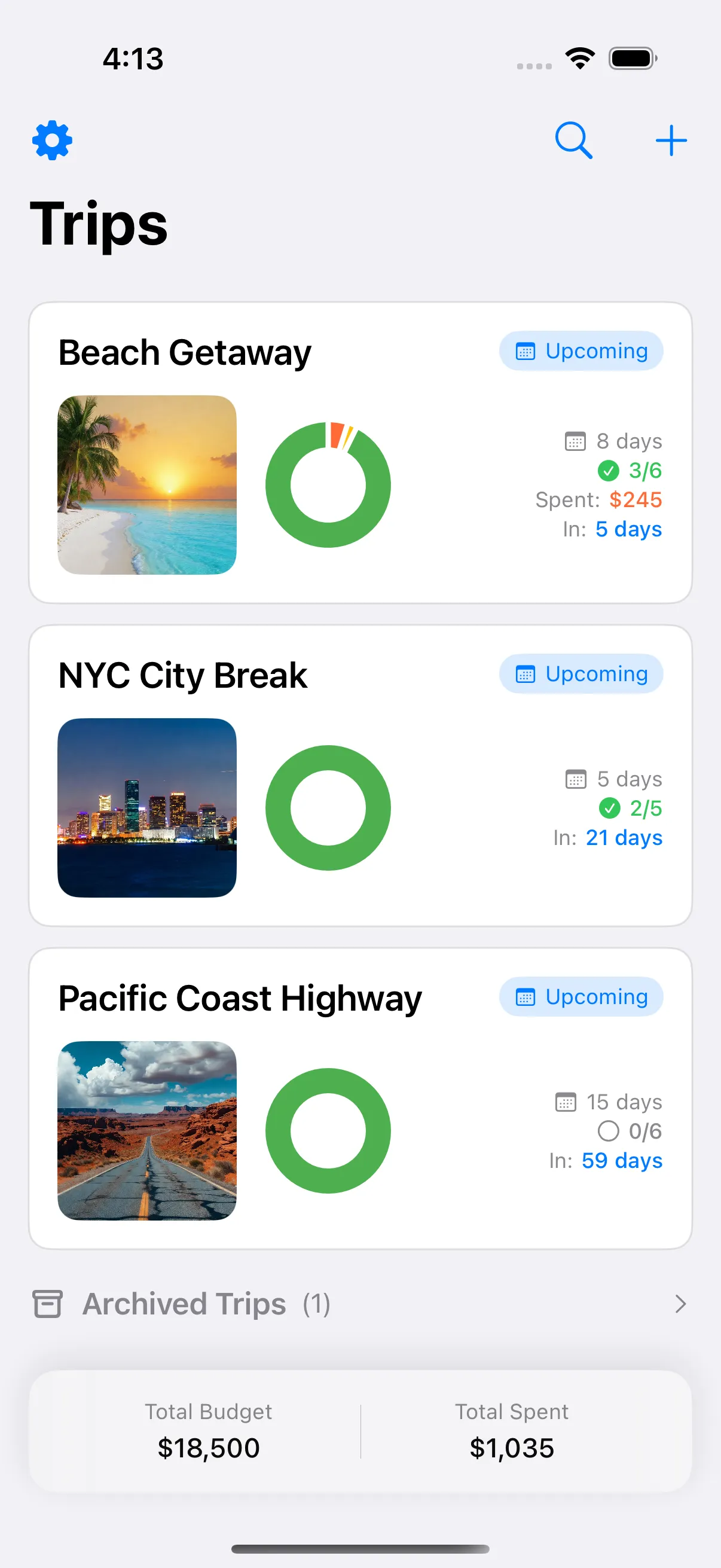
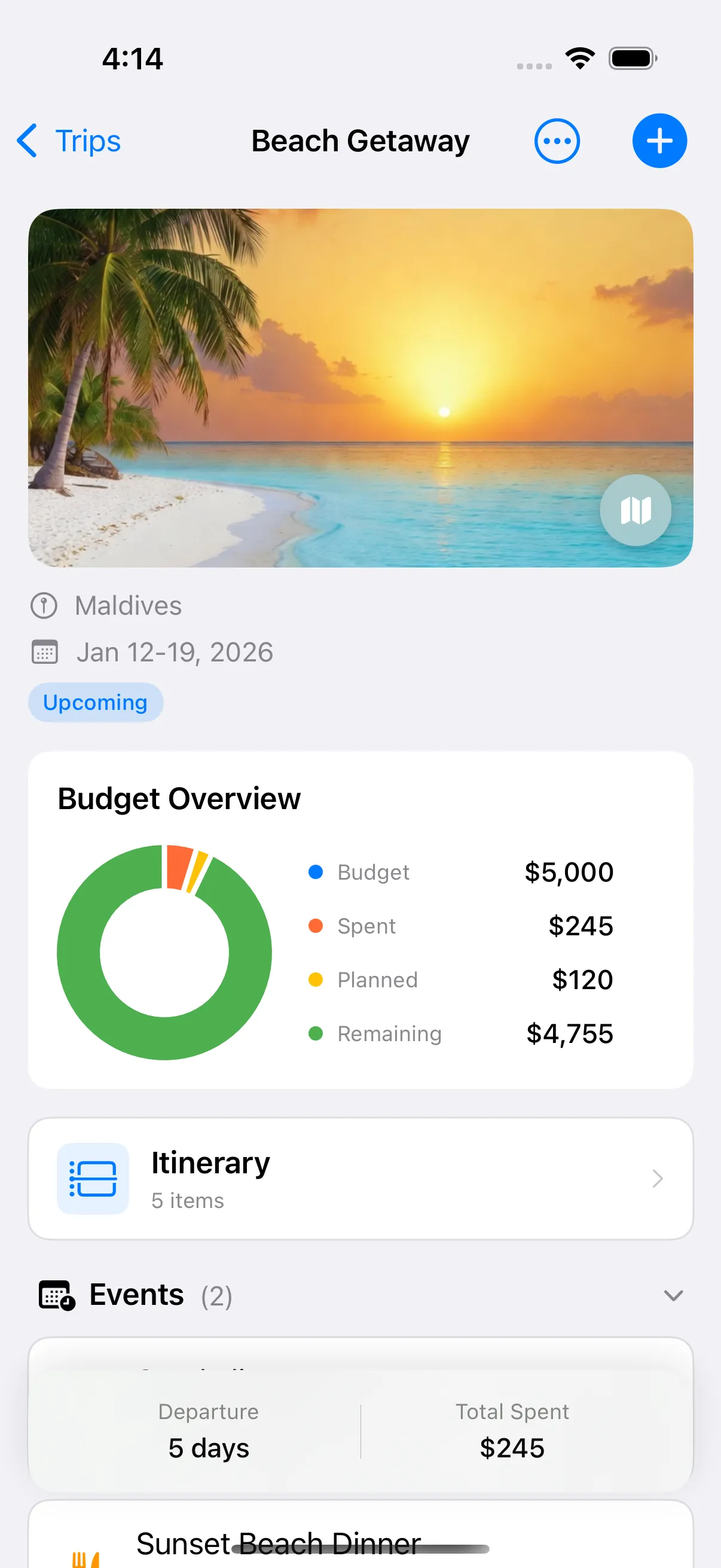
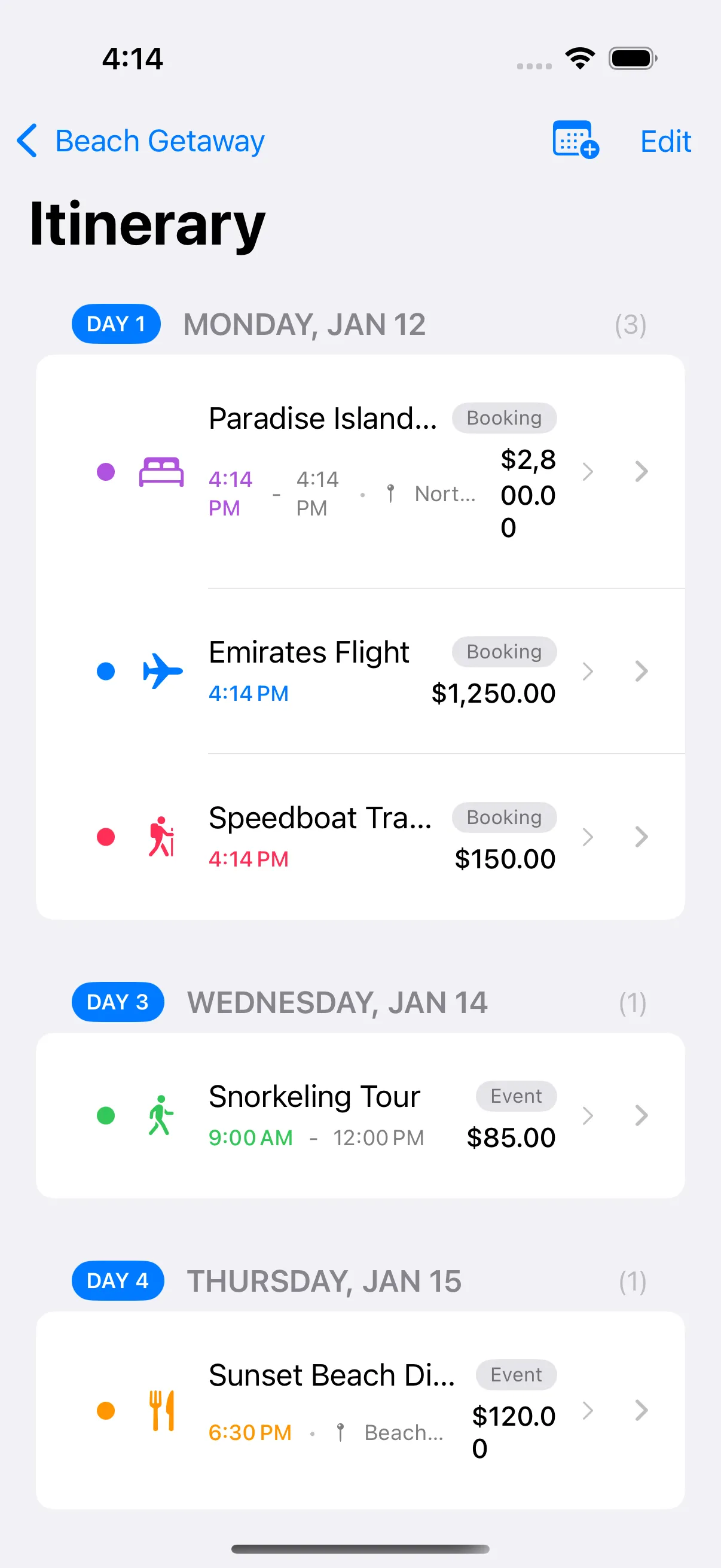
Bookings, tickets, the itinerary, the expense totals, the diary, the favourite photos — bring them together into a single trip record before they scatter across four apps and an email inbox. This is exactly what a trip app’s history is for: in the free Travel Stories app, the itinerary, expenses, packing list, and photo diary you built during the trip already sit together as one finished, offline record — closing the trip is simply a matter of writing the last diary entry.
Forward-looking: bank the lessons
The final two items take ten minutes and are the difference between getting better at travelling and making the same mistakes annually.
11. Note what you would pack and plan differently
While the trip is fresh, write down the specifics: the jacket you never wore, the second pair of shoes you did not need, the adapter you had to buy, the museum that needed pre-booking, the neighbourhood you wish you had stayed in. Attach these notes to your packing list and planning notes, not to a random document — next trip, you want them to surface automatically. If you started from a ready-made list, note the edits against it: the two or three items you add or drop every trip are your real list.
12. Start the next trip’s wishlist
Every trip generates ideas for the next one: a place a local recommended, a town you passed through too quickly, a country a fellow traveller would not stop talking about. Capture them now in a wishlist — a note, a saved list, or a draft trip. It costs nothing, and six months later it turns “where should we go?” from a blank page into a shortlist. When one of them becomes real, our guide on how to plan a trip step by step picks up from there.
The one-week schedule
Twelve items sounds like a lot; spread across a week it is not:
| Day | Tasks |
|---|---|
| Day 1 | Unpack (4), start laundry (5), log final expenses (1) |
| Day 2-3 | Restock the travel kit (6), check passport (7), photo pass one (8) |
| Day 4-5 | Submit reimbursements and claims (3), photo pass two (8), finish the journal (9) |
| Day 6-7 | Check statements (2), archive the trip (10), lessons and wishlist (11, 12) |
No single day takes more than about half an hour. By the weekend, the money is settled, the gear is reset, the memories are kept, and the next trip already has a head start — which is the entire point of a post-trip checklist: the trip ends deliberately, instead of just trailing off. If you want to know what to capture during the trip so this week has raw material to work with, our guide on how to document your travels covers the five layers.
Ready-made packing lists for this
Free, no sign-up: tick items off in the browser, print it, or adjust it to your own trip.
Camping packing list
A camping list organised by the three systems that matter — shelter, sleep and cook — plus the R-value most people ignore and the tarp that doubles your usable space.
Weekend hiking packing list
A two-day hiking list organised by weight: the big three that dominate your pack, the layering system that works, and the items you carry precisely because you hope not to use them.
Ski trip packing list for a week
A week of skiing: what to rent and what to bring, why your boots belong in the cabin, and the sunburn nobody plans for. Includes après and travel-day items.
Festival packing list
A festival list for the conditions rather than the photos: mud, no charging, no shade, banned glass, and a tent you have to find again at 2am.
Or build one from scratch with the packing list generator.
Frequently asked questions
What should you do after returning from a trip?
Four things, in rough order: settle the finances (log final expenses, check your statements, claim reimbursements), reset your gear (unpack, laundry, restock the travel kit), preserve the memories (organize photos, finish the journal), and write down what you would do differently next time. Spread over the first week home, none of it takes more than 20-30 minutes a day.
How long after a trip should you check your credit card statement?
Check it about a week after you return, and once more when the monthly statement closes. Hotel incidentals, fuel pre-authorisations, and currency conversions often post days after the transaction, so a check on day one misses them. You are looking for double charges, unexpected fees, and amounts that do not match your receipts.
How soon should I organize my travel photos after a trip?
Within the first week, while you can still tell which town, which restaurant, and which day each photo belongs to. After a month, half that context is gone and the job takes twice as long. One pass to delete the obvious failures and one pass to pick favourites is enough — perfection is not the goal.
What is post-travel admin?
It is the cluster of small tasks a trip leaves behind: expense claims, statement checks, unpacking, laundry, restocking toiletries, backing up photos, and updating documents. Individually each task is five to twenty minutes; the problem is that untracked, they linger for months. A written post trip checklist turns them into one finite week of work.
Should I unpack immediately after a trip?
Within 24 hours, yes — not necessarily the minute you walk in. A suitcase left packed becomes furniture: the laundry goes stale, the toiletry bag stays empty for the next trip, and anything borrowed or damp sits unnoticed. One systematic 20-minute pass (laundry pile, put-away pile, restock pile) beats a week of pulling items out one by one.
Keep reading

How to Keep a Travel Journal You'll Actually Maintain
A realistic travel journal method: 5 minutes a day, one line plus a photo, prompts that beat 'dear diary', and how to turn a trip into a story you revisit.
How to Organize Travel Photos After a Trip (Before You Forget)
A one-week workflow to organize travel photos: cull in two favorites passes, sort into trip and day albums, write each photo's story, then back up.
Travel Checklist: Everything to Do Before Leaving Home
The complete pre-departure travel checklist — what to do 2 weeks out, 1 week out, the day before, and the day you leave, from documents to door locks.