Packing List for International Travel: The Complete Checklist
A good packing list for international travel covers five things: documents, carry-on essentials, clothing, toiletries and medications, and tech. This guide gives you the complete copy-paste list, a simple clothing formula so you never overpack, and add-ons for beach, city, cold-weather, and business trips.
What should be on a packing list for international travel?
A complete packing list for international travel has five sections: documents, carry-on essentials, clothing, toiletries and medications, and tech. Get those five right and the rest is trip-specific extras.
International trips punish forgetfulness more than domestic ones. Forget a charger on a weekend trip and you buy one at a gas station. Forget your passport, prescription meds, or the right power adapter on an international trip and you may not board the plane, or you spend a day of your holiday hunting for a pharmacy that stocks your medication.
This guide is built to be copied. Take the base list, apply one of the destination modifiers at the end, delete what doesn’t apply, and you’re done. If you’d rather have that done for you, the packing list generator builds the same list from your trip type, length and climate — free, no sign-up, and printable. If you want the full pre-departure routine beyond packing — house, money, phone plan — see the travel checklist before leaving.
Documents: the section you check twice
Nothing else on this list matters if this section fails. Check it when you write the list and again the night before you fly.
- Passport — valid at least 6 months beyond your return date. Many countries refuse entry otherwise.
- Visa or entry authorization — check your destination’s rules even for short stays. Several regions now require online pre-authorization even for visa-free travelers.
- Boarding passes — digital plus a screenshot in case the airline app fails offline.
- Travel insurance policy — the policy number and the emergency phone number, accessible without internet.
- Hotel and booking confirmations — some border officers ask for proof of accommodation.
- Driver’s license — plus an International Driving Permit if you plan to rent a car; many countries require it.
- Copies — a photo of your passport photo page stored on your phone, and one paper copy packed separately from the original.
- Payment cards — two cards from different networks, kept in different bags, plus a small amount of local cash.
Keeping confirmations findable is half the battle. A folder in your email works until you’re standing at a reception desk with no signal. Storing boarding passes, reservations, and your insurance policy in one offline place on your phone solves that.
Carry-on essentials: what never goes in checked luggage
Checked bags get delayed. Plan as if yours will be. The rule: if you can’t cheaply replace it at your destination, it flies in the cabin with you.
| Always in carry-on | Why |
|---|---|
| Passport + documents | Cannot be replaced abroad quickly |
| All medications | Pharmacies may not stock or may require local prescriptions |
| Phone, laptop, chargers | Expensive, and lithium batteries must be in the cabin anyway |
| One full change of clothes | Covers a 24-48 hour bag delay |
| Valuables (jewelry, camera) | Theft and damage risk in checked bags |
| Empty water bottle | Fill after security; long flights are dehydrating |
| Pen | Arrival cards still exist in many countries |
Add comfort items to taste: earplugs or noise-canceling headphones, an eye mask, a light sweater (cabins run cold), lip balm, and snacks. Liquids in carry-on must be 100 ml or less per container, in one clear resealable bag — this rule is near-universal internationally.
The 5-4-3-2-1 clothing formula
Overpacking clothing is the most common packing mistake, and a formula fixes it. For one week:
- 5 tops — t-shirts, shirts, or blouses that all work with every bottom
- 4 bottoms — pants, skirts, or shorts suited to the climate
- 3 pairs of shoes — one comfortable walking pair, one casual, one dressier or activity-specific
- 2 layers — a sweater or hoodie plus a jacket appropriate to the destination
- 1 nice outfit — for a dinner, a show, or anywhere with a dress code
Plus underwear and socks for each day (7 of each for a week), sleepwear, and swimwear if there’s any chance of water.
Three rules make the formula work:
- Pick one or two base colors. If everything is built around navy and grey, every top matches every bottom and you get 20 outfits from 9 pieces.
- Wear the bulkiest items on the plane. Boots, the heavy jacket, the thickest sweater — on your body, not in your bag.
- Going longer than a week? Do laundry, don’t pack more. The 5-4-3-2-1 count covers two weeks with one wash. Almost every destination has laundromats or hotel laundry.
Toiletries and medications
Toiletries are the easiest category to cut, because nearly everything is available at your destination. Pack the minimum, buy the rest if needed.
Toiletries:
- Toothbrush, toothpaste, floss
- Deodorant
- Travel-size shampoo and soap (or rely on the hotel’s)
- Razor and shaving needs
- Sunscreen — expensive and sometimes hard to find abroad; bring it
- Skincare basics and any makeup you actually use daily
- Contact lenses, solution, and a backup pair of glasses
- Hairbrush or comb
Medications — this part is not optional:
- All prescription medication in original packaging, in your carry-on, with a few days extra in case of delays
- A copy of the prescription for anything controlled or injectable; some countries check
- Painkillers, motion-sickness tablets, anti-diarrheal, antihistamines
- Plasters and blister care — new shoes plus 20,000 steps a day is a predictable combination
- Any destination-specific items your doctor recommends (altitude, malaria zones, required vaccinations documentation)
Check your destination’s rules for common medications. Some drugs that are over-the-counter at home are restricted elsewhere.
Tech and adapters
- Phone + charger — the item most often left in a wall socket at home
- Power adapter — check your destination’s plug type; a universal adapter with USB ports covers everything
- Power bank — must be in carry-on, most airlines cap at 100Wh (27,000 mAh)
- Charging cables — one spare for your most important device
- Headphones
- E-reader or tablet — if you’ll actually use it
- Camera + memory cards + charger — if your phone isn’t enough
Two notes. First, most modern chargers accept 100-240V, so you need an adapter (plug shape) but almost never a converter (voltage) — check the fine print on the charger to confirm. Second, sort out data before you fly: an eSIM for your destination or a confirmed roaming plan beats airport Wi-Fi hunting.
Destination modifiers: adjust the base list
Don’t write a new list per trip. Keep the base list and add one block.
Each of these has a ready-made version with the base list already merged in: beach, city break, cold weather, and business.
Beach:
- 2 swimsuits (one dries while you wear the other)
- Flip-flops or sandals
- High-SPF sunscreen and after-sun
- Sun hat and sunglasses
- Dry bag for phone and valuables
- Light cover-up
City:
- Your most comfortable walking shoes — this is the whole trip
- Daypack or crossbody bag that zips (pickpockets work every major city)
- Smart-casual layer for restaurants
- Portable umbrella
Cold weather:
- Thermal base layers (tops and bottoms)
- Insulated jacket, hat, gloves, scarf
- Waterproof boots with grip
- Wool socks
- Lip balm and heavier moisturizer
Business:
- Suit or equivalent, packed in a garment bag or folded over tissue paper
- Dress shoes plus a comfortable pair for transit
- Laptop, presentation backup on a USB stick
- Business cards
- A steamer-friendly fabric choice — or plan to use the hotel iron on day one
What NOT to pack
Cutting is as important as adding. Leave these at home:
- “Just in case” outfits. If you can’t name the day you’ll wear it, it stays.
- Full-size toiletries. Heavy, spill-prone, and replaceable anywhere.
- More than 3 pairs of shoes. The heaviest, bulkiest category in any bag.
- A different bag for every function. One daypack covers hiking, city walking, and the flight.
- Books, plural. One paperback or an e-reader.
- A towel — hotels have them; only pack one for camping or hostels that charge.
- Expensive jewelry. Risk with no upside.
- Anything prohibited at your destination. Check rules on drones, e-cigarettes, and certain medications — each is banned or restricted in some countries.
The test for every borderline item: can I buy this at my destination for under $10? If yes, and you’re not certain you’ll need it, leave it.
How to actually use this list
A packing list only works if you check things off as they physically enter the bag — not from memory, not “I’m sure I packed it.” The reliable routine:
- Two weeks out: write the list, order anything missing (adapter, meds refill).
- Three days out: lay everything out in one place. Cull the “just in case” pile.
- The night before: pack, checking off each item as it goes in.
- Before leaving home: final sweep — wall sockets, bathroom shelf, fridge, door keys.
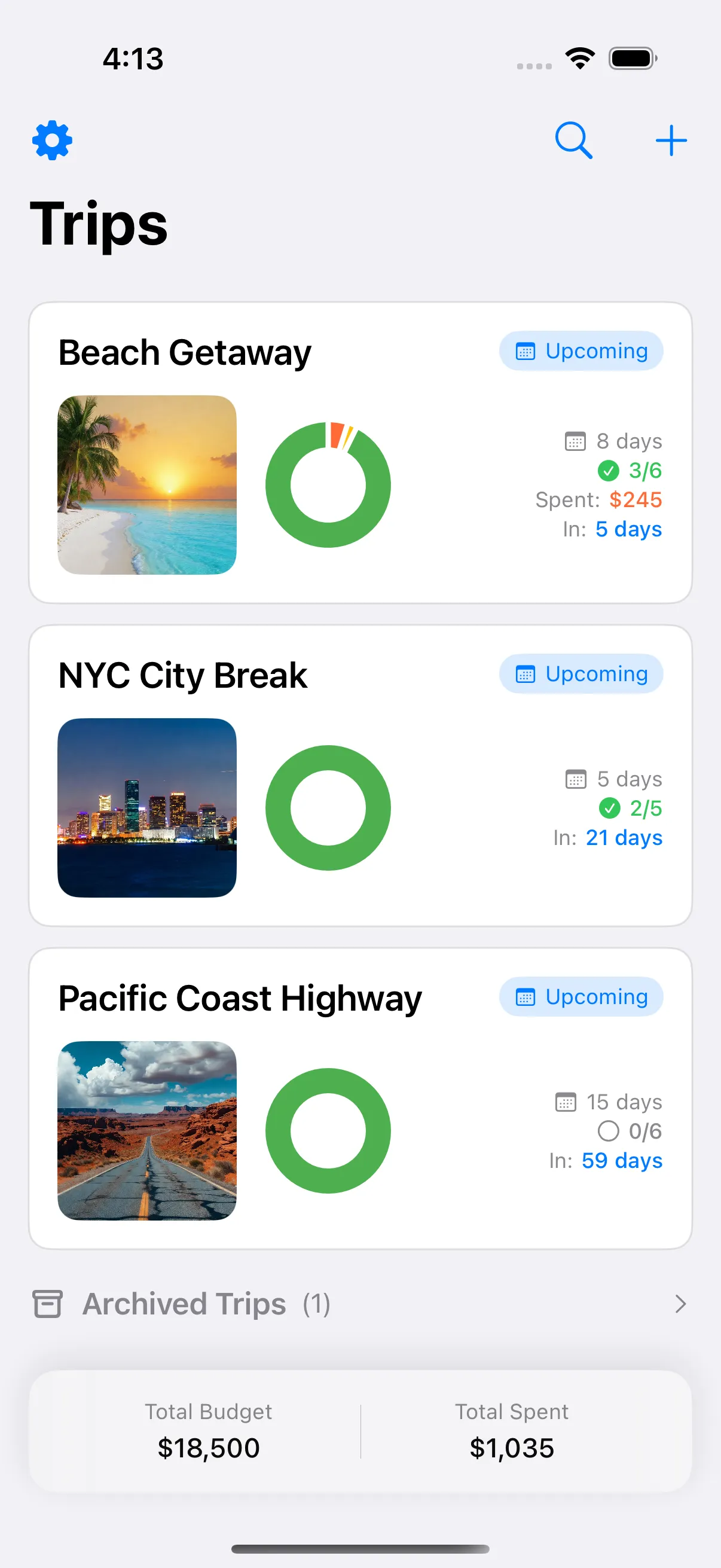
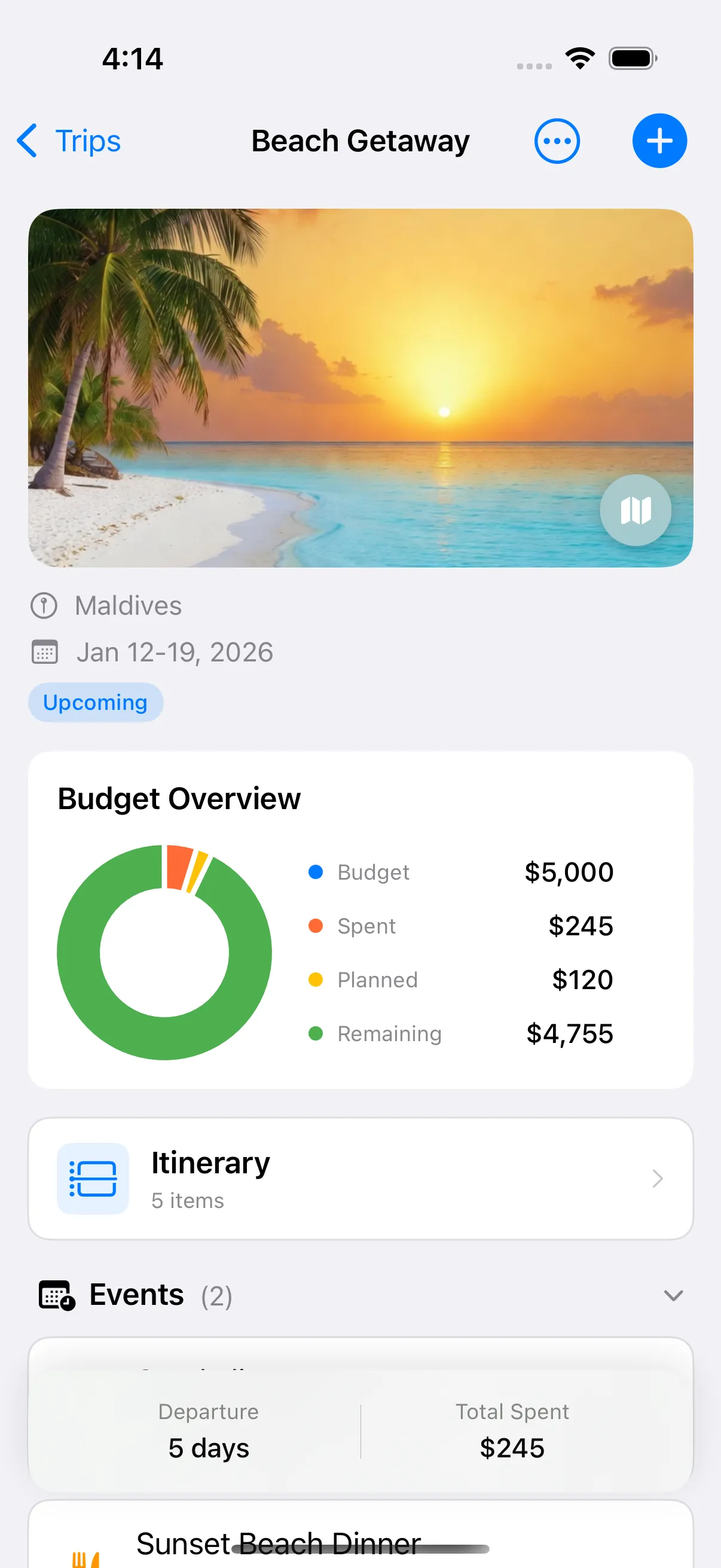
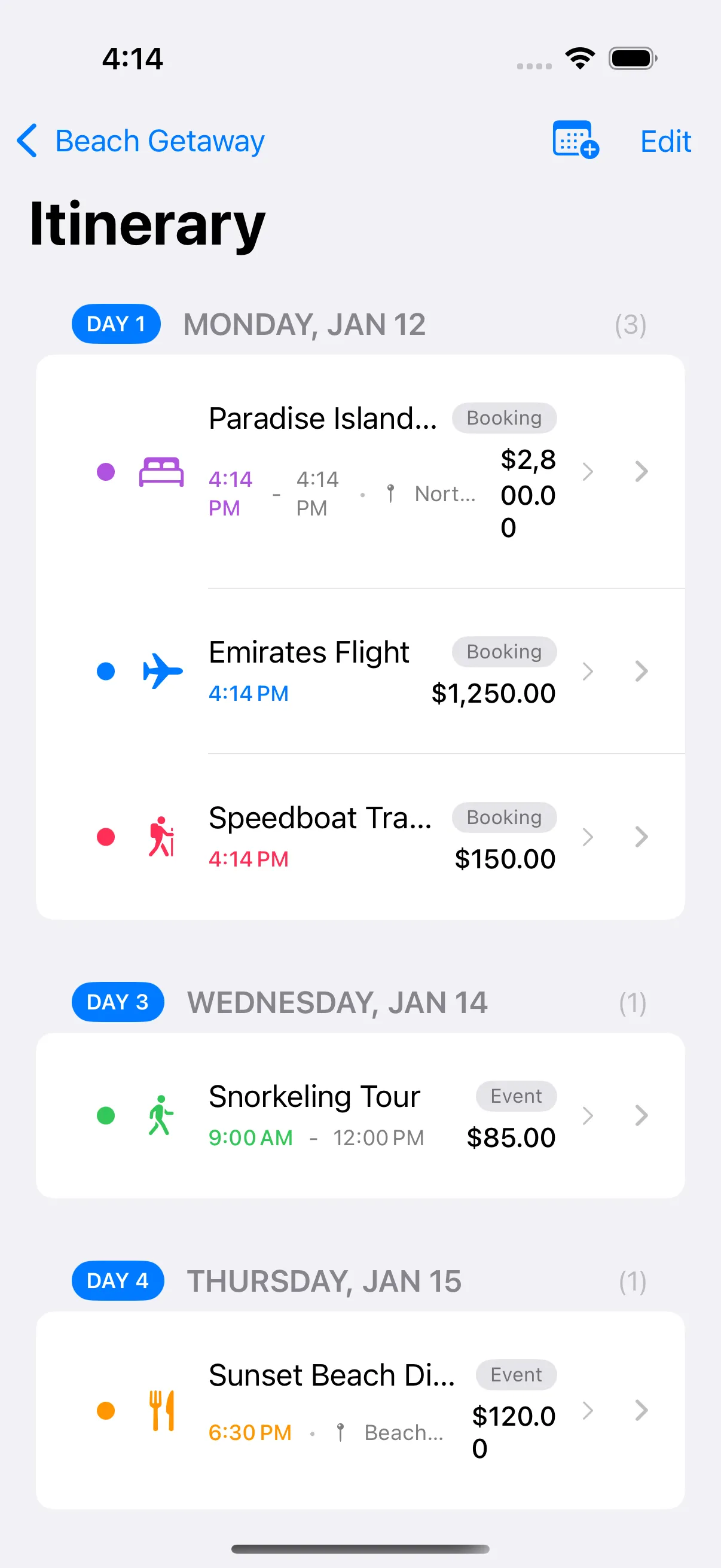
Paper lists work but get thrown away, and next trip you start from zero. This is where a reusable checklist earns its place: build it once, and every future trip starts at 90% done. Travel Stories includes packing lists with suggested items built in, alongside your itinerary and documents — you can get it free on the App Store and have this list rebuilt in about five minutes.
Packing is also only one lane of trip prep. Booking order, budget, and the day-by-day plan each have their own routine — the step-by-step trip planning guide covers the full sequence, and if you’re comparing tools, see the best trip planner apps.
Put it into practice
Copy the base list, apply your destination modifier, and cut anything that fails the $10 test — then keep the list somewhere reusable, like the packing checklist in Travel Stories, so your next trip starts from a list that already works.
Or skip the copying: the packing list generator assembles the base list and the right modifiers from your trip type, length and climate, and gives you something you can tick off, print, or send to whoever you’re travelling with.
Ready-made packing lists for this
Free, no sign-up: tick items off in the browser, print it, or adjust it to your own trip.
What to pack for Japan in winter
A winter Japan packing list built around what actually catches visitors out: constant shoe removal, cash-only counters, brutal indoor heating, and tiny hotel rooms.
What to pack for Iceland in summer
Icelandic summer means 10°C, sideways rain, and daylight at 2am. Here's the packing list for the weather Iceland actually has, not the one the photos suggest.
What to pack for Thailand
A Thailand packing list that assumes you'll buy half of it there. Temple dress codes, the heat, the rain, and the things that are genuinely worth carrying from home.
What to pack for Vietnam
Vietnam runs 1,600km north to south and Hanoi in winter is genuinely cold. A packing list for a two-week trip that crosses climates, sleeper buses and tailors.
What to pack for a safari
A safari packing list covering the two rules that catch people out: which colours to avoid and why, and the strict soft-bag weight limits on light aircraft transfers.
What to pack for New York in winter
A winter New York packing list for a long weekend: wind tunnels, slush at every crossing, overheated interiors, and the fact that you'll be carrying your coat indoors.
Or build one from scratch with the packing list generator.
Frequently asked questions
How far in advance should I start packing for an international trip?
Start the list two weeks out and do the physical packing two to three days before departure. The two-week head start matters for things you might need to buy or renew, like adapters, medication refills, or a passport check. The actual folding takes an evening once the list exists.
What should always go in my carry-on instead of checked luggage?
Passport and documents, all medications, electronics and chargers, valuables, and one change of clothes. Checked bags get delayed and misrouted, so anything you cannot buy cheaply at your destination belongs with you in the cabin.
How many clothes should I pack for a one-week international trip?
The 5-4-3-2-1 formula covers a week: 5 tops, 4 bottoms, 3 pairs of shoes, 2 layers, 1 dressier outfit. Everything should mix and match around one or two base colors. For longer trips, keep the same count and plan to do laundry once instead of packing more.
Do I need a power adapter for international travel?
Almost always, yes. Plug shapes and voltages differ by region, so check your destination's plug type before you leave. A single universal adapter with USB ports covers most trips and takes less space than one adapter per device. Modern phone and laptop chargers handle 100-240V, so you rarely need a voltage converter.
What is the most commonly forgotten item on international trips?
Chargers and adapters top most travelers' lists, followed by medications, sunscreen, and copies of travel documents. The fix is boring but reliable: keep a written packing list, check items off as they physically go in the bag, and do a final sweep of outlets and bathroom shelves before leaving home.
Keep reading

Best Trip Planner Apps for iPhone: An Honest Comparison
An honest look at TripIt, Wanderlog, Google Maps lists, Notion, and Travel Stories — who each trip planner app is really best for, from the maker of one.

How to Plan a Trip Step by Step: A Complete 9-Step Guide
Learn how to plan a trip step by step — pick dates, set a budget, book transport, build an itinerary, pack, and track spending in one simple system.
Travel Checklist: Everything to Do Before Leaving Home
The complete pre-departure travel checklist — what to do 2 weeks out, 1 week out, the day before, and the day you leave, from documents to door locks.